Endoprosthesis of the knee joint
 Problem: When the knee needs radical help
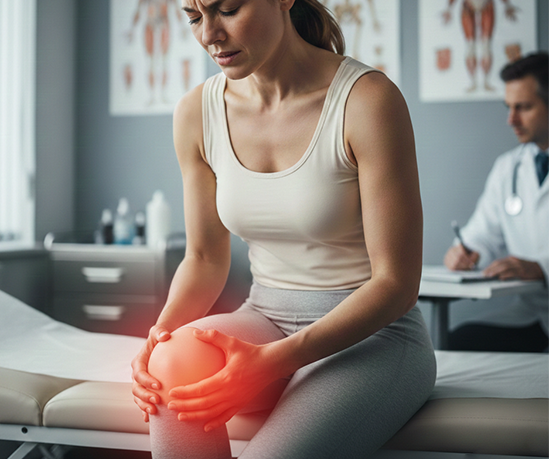
Advanced arthrosis is not just pain, it is a permanent limitation of your freedom. When the cartilage is completely destroyed, the joint stops working as a shock absorber.
- Chronic destruction (Arthritis stage IV): Cartilage tissue is practically absent. Every movement is accompanied by friction of exposed bones, which causes acute inflammation and excruciating pain, which does not subside even after taking medication.
- Changing the anatomical axis: You notice that the leg is crooked (O-shaped or X-shaped deformity), “clubfoot” or instability appears. This is the result of uneven wear of the joint surfaces, which overloads the back and the other leg.
- Loss of mobility: The knee “locks”, there is night pain, and an ordinary walk becomes a real test. If you plan your route, taking into account the presence of benches for rest, it’s time to act.
“If you notice at least 2-3 symptoms from the list, your joint needs immediate diagnosis to avoid complete loss of mobility”
Technologies: An investment in your activity
We don’t just apply a “patch”, we restore the natural biomechanics of your foot.
- Premium materials: We work with biocompatible alloys, which the body perceives as its own tissue. The combination of titanium, chrome and high molecular weight polyethylene ensures a smooth movement without wear for decades. To restore knee function, we use innovative systems from world leaders: Stryker (Triathlon), Zimmer Biomet (Persona) and Smith & Nephew (Oxinium).
- Personalized selection: Thanks to digital modeling, we take into account the unique features of your anatomy. This allows you to install the implant in such a way that you forget about its presence in a few months.
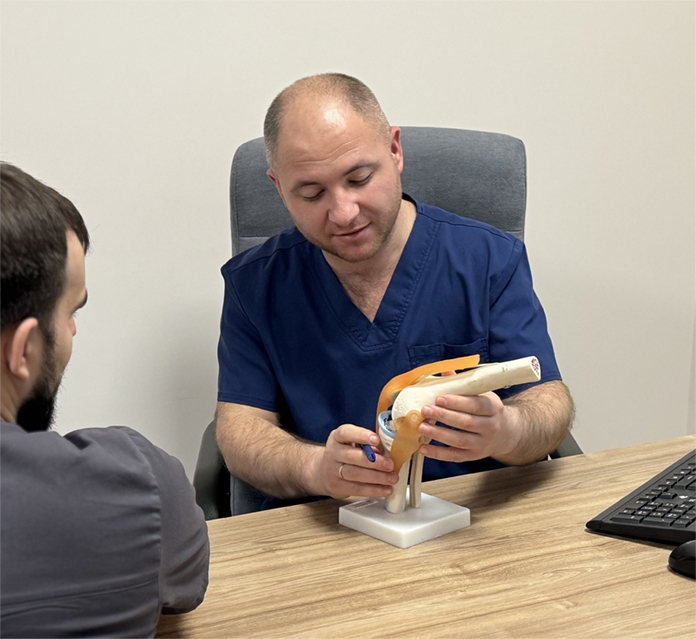
About the Doctor: Philosophy of functional surgery
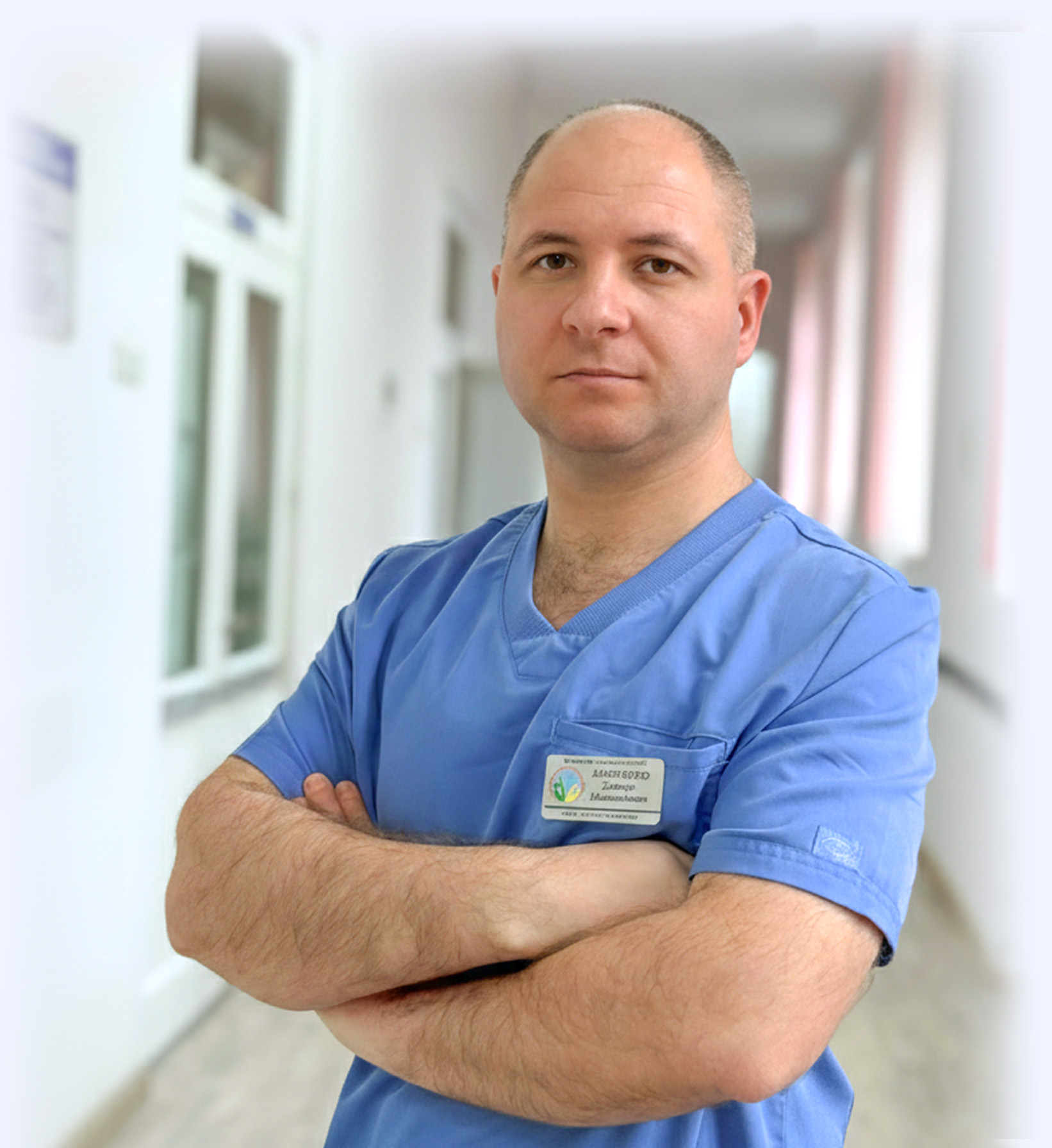
My task is not just to replace the joint, but to return you to the quality of life that was 10-15 years ago. In my practice, I use the technique of minimal intervention: we do not cut the muscles, but gently move them apart. This is the key to being able to get back on your feet a few hours after surgery and quickly return to your favorite activities
Preparation: Medical safety protocol
Preparation lasts about 10-14 days and includes a comprehensive examination to exclude postoperative risks:
- Laboratory minimum (7 days before surgery): Comprehensive blood analysis, coagulogram (blood clotting time), glucose level and glycated hemoglobin (important for patients with diabetes), determination of blood group and Rhesus factor.
- Diagnostics of the heart and blood vessels: ECG with interpretation and ultrasound of the veins of the lower extremities (dopplerography) to rule out thrombosis.
- Remediation of foci of infection: Dentist and ENT doctor consultation. Any chronic inflammation must be treated to prevent bacteria from reaching the implant via the bloodstream.
- Correction of therapy: In 5-7 days, it is necessary to stop taking antiplatelet agents and anticoagulants (blood thinners) under the strict supervision of a doctor.
Operation: Technological stage of recovery
Surgical intervention lasts from 60 to 90 minutes and is performed according to a clear algorithm:
- Minimally invasive access: We use technology Subvastus, which allows you to reach the joint without cutting the muscles and ligaments of the extensor apparatus of the knee. This significantly reduces pain after surgery.
- Precision bone processing: With the help of special power systems and templates, the surgeon removes only the damaged layer of bone (about 8-10 mm), forming an ideal bed for the components of the prosthesis.
- Link balancing: This is a critical stage where the doctor checks the tension of the soft tissues. Only with perfect balance will the knee feel like “native”.
- Stable fixation: The components are fixed using high-strength bone cement with the addition of an antibiotic for maximum protection against complications.
Rehabilitation: From the first step to complete freedom
We don’t leave you alone with your new joint.
- Early activation: The Fast Track program allows patients to start moving on the day of surgery. This is the best prevention of complications.
- Go to school: Our rehabilitators will teach you how to properly distribute the load so that the muscles “remember” how to work without pain.
- Constant control: You receive a personalized home exercise program and a schedule of follow-up visits to track your progress.