
We are used to visiting the dentist once every six months or having the car inspected in order to avoid large expenses in the future. However, our musculoskeletal system is often neglected until the pain becomes unbearable. An orthopedic check-up is a comprehensive examination, the purpose of which is to find “weak spots” in your joints, ligaments and spine at a stage when the problem can be solved with simple exercises or lifestyle adjustments.
“Hidden signals”: who needs waiting today?
Even if you don’t feel acute pain, your body may be signaling that it’s overloaded. Pay attention to the following:
- Quick leg fatigue: You feel heavy in your feet after a short walk.
- Morning "stiffness": You need a few minutes to "seize" after sleep.
- Intermittent crackles: sounds in the knees, shoulders, or neck that have not been heard before
- Change in posture: if you notice that you are slouching more at your desk.
- Uneven shoe wear: If the sole on one foot wears faster or differently than the other.
Why should you not ignore prevention?
Unlike children, the skeleton of adults is already formed, but it undergoes daily degeneration.
- Office syndrome: sedentary work leads to weakness of the core muscles and overload of the spine.
- Sports ambitions: many adults begin intense training without preparation, which injures the joints.
- Age changes: after 35-40 years, ligament elasticity and cartilage density naturally decrease.
How is professional waiting at a traumatologist?
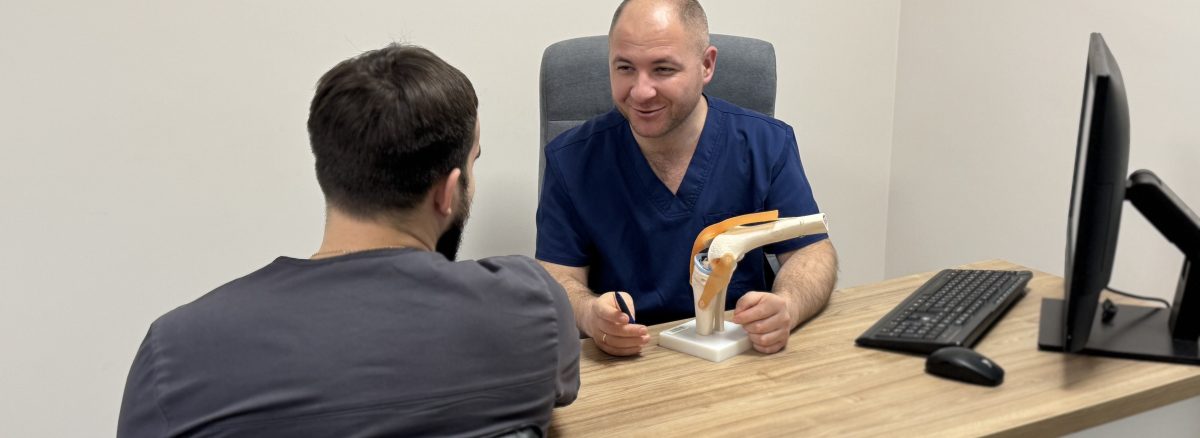
A preventive examination in our clinic is not just “knock with a hammer”. This is a systemic analysis of your biomechanics:
- Visual analysis and plantoscopy: assessment of the position of the pelvis, spine and arches of the feet. We watch how you stand and how you walk.
- Testing amplitude of movements: checking how freely your joints (knees, hips, shoulders) move.
- Muscle testing: detection of imbalance — where the muscles are too tight and where they are too weak.
- Ultrasound screening (if necessary): quick assessment of the state of soft tissues and the presence of hidden inflammations in the most stressed joints.
- Osteoporosis risk analysis: for patients of appropriate age groups.
Checkout result: your health passport
After the examination, you not only receive a diagnosis, but a clear strategy:
- Activity recommendations: which sport is right for you and which one is better to avoid.
- Correction of the workplace: how to sit so that the back does not hurt until the evening.
- Selection of orthopedic products: whether you need custom insoles or correctors.
- Preventive treatment plan: if we find initial changes (for example, stage 1 osteoarthritis), we prescribe a course of PRP or vitamin support to stop the process for years.
FAQ: Frequently asked questions about prevention
— Is it necessary to do an MRI of the whole body before checking? No, this is a waste of money. The doctor prescribes additional studies (MRI or X-ray) only when signs of a specific pathology are revealed during the examination.
— How often should such an examination be carried out? For adults who do not have chronic complaints, it is enough to undergo a check-up once a year. If you actively play sports – once every six months.
— How long does a full examination take? Usually, the initial orthopedic check-up lasts from 30 to 45 minutes. It is an investment of time that saves your money for future transactions.
— Will waiting help if I often have a headache? Yes, problems with the cervical spine and posture are often the cause of headaches. An orthopedist will help find the root cause.

YOUR STEP TO HEALTH
Joint health is your ability to stay active, travel and work without limitations. Don’t wait for a sharp pain to make you change your plans.
Stay one step ahead of the disease! Sign up for an orthopedic check-up in Odessa and make sure that your support is reliable.